Somewhere along the way, an entire industry decided that not knowing was simply part of the job. We think that was a decision, not a fact, and decisions can be revisited.
Not because a law is passed. Not because a technology suddenly appears. Because a better way becomes impossible to ignore, and one day the previous way of working simply looks like negligence.
Finance reached it. Aviation reached it. Logistics reached it decades ago. Nobody today would accept a parcel company that could not tell you where your parcel was.
Water has reached that moment. We move a substance that is abstracted, treated, dosed, pumped and paid for, through a network we largely cannot see, and we still find out about the failures from a member of the public.
GIS. SCADA. Hydraulic models. Pressure sensors. Flow meters. Event logs. Dashboards built on dashboards. More instrumentation in the last decade than in the previous fifty years.
And every morning, in every control room, the same six questions: Where is the leak? Can we trust this signal? Is this an incident or just noise? Which pipe matters most? Where do we send the crew? Which investment will actually improve the network?
We asked five different people inside a water utility what they would never admit out loud. Every one of them said a version of the same sentence: I don't fully trust our own data.
More sensors will not fix it. Rio proved that: we cut the sensors in use from about three hundred to about one hundred, and detection went from one leak in ten to nine.
Categories are not won on features. They are won by changing the language an industry uses about itself. The companies that define a category do not simply sell a better product. They change how the customer describes their own problem.
The name of ours is Real-time Water Intelligence. Not because the phrase is clever, but because the alternative, leak detection, describes a task, and this is not a task. It is a way of operating.
Leakage is where we begin. It is urgent, it is visible, and it is measurable, which makes it the honest place to prove ourselves. It is not where we end.
One day, “where is the leak?” will sound like an outdated question, the way “where is my parcel?” already does.
Most software companies assert. We would rather show, and we would rather show the parts that are inconvenient.
So every number we publish carries its method, its source, the customer it came from, and what it does not cover. When a controlled test missed its target, we published the miss at the same size as the hits. When a result came from post-event analysis rather than real time, we said so in the same paragraph.
This makes us more careful about what we say. It should make us considerably more believable when we say it. A vendor who only tells you the flattering half of a comparison has told you something about themselves.
Focus is not something a company announces. It is something it protects, usually by saying no to work that would have been perfectly acceptable.
Volume is not influence. We would rather publish one idea that moves an industry than fifty assets nobody remembers.
An operator at two in the morning deciding whether this is real. A leakage manager whose name is on every dispatch that turns out to be nothing. An engineer who will be asked, in twenty years, why a main was or was not replaced.
We build for them, and that has a consequence in the product: it has to be honest about what it does not know. Which sensors were blind during the event. Why it reached a conclusion. What it ruled out along the way.
An assistant that is confidently wrong is worse than no assistant at all.
We would rather build it than wait for it.
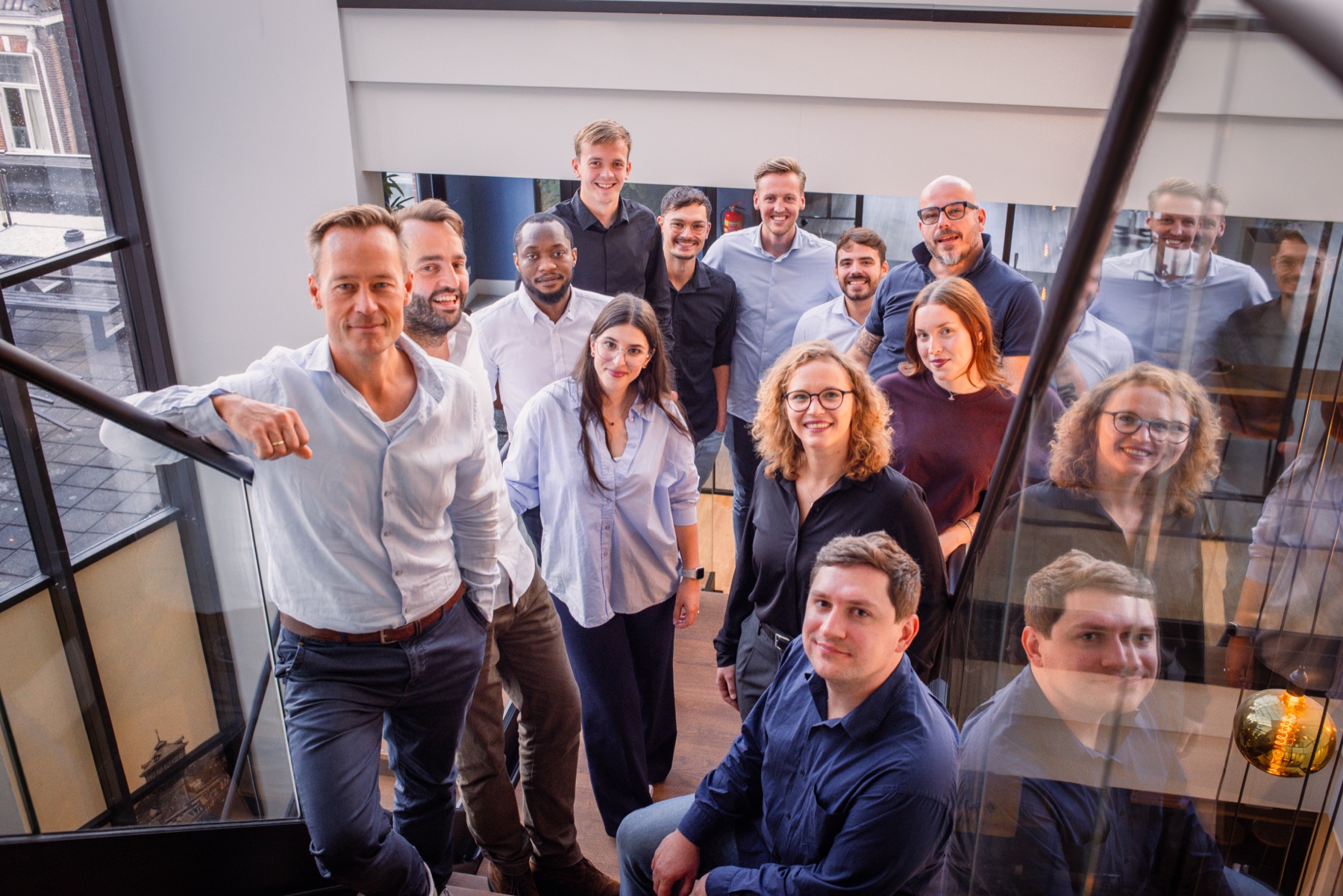
A small team doing something disproportionate to its size. That only works with people who would rather own a hard problem than be handed a safe one.
Nothing you would fancy? Write to us anyway. We have made a role for the right person before.
Physics-based hydraulic modelling and machine learning, running on live networks in production, not in a research backlog.
What you build changes what a crew does at three in the morning, and how much treated water stays in the ground.
Responsibility with the authority to go with it. Strong opinions welcome. Vague ones less so.
What we found, on which network, and what it cost to find it. Roughly monthly, and never a figure we cannot show you the working for.













HULO’s project Lekker (tegen lekken) is co-financed by the European Union, by SNN and by the Dutch Ministry of Economic Affairs.